Welcome to the American AED CPR Association. Check our our articles on CPR, First Aid, AED, Bloodborne Pathogens and continuing education for healthcare professionals.The American AED CPR Association has been offering classes.
When you arrive at the scene of an emergency, it’s your duty as a first responder to provide care for those in need. But your own safety is important too. Whether you’re a professional or a lay-rescuer, you need to come prepared, and make sure you aren’t putting yourself in danger. This means having the right equipment, and … read more
A stroke is a serious medical emergency. Having a stroke can be fatal, or result in lifelong complications. Because of this, it is important to know whether or not you are at risk of having a stroke, so you can take steps to reduce that risk.
Imagine for a minute that you see someone lying on the ground. You check to see if they’re okay and suddenly notice they’ve stopped breathing. You decide to rely on your training and perform CPR. Thanks to your efforts, the victim is successfully resuscitated and taken to … read more
Whether it’s at the beach or in a public water park, being a lifeguard is a popular summer job. Working as a lifeguard can be fulfilling, and the experience can teach you valuable life skills; you can learn how to work as a team with others, handle medical emergencies and improve their confidence and leadership … read more
Being able to perform CPR in the event of an emergency is an invaluable skill. Just about everyone can benefit from learning it, but for some of us, having proper CPR training is essential. Having CPR certification is a boon, both personal and professional. There are a number of jobs and careers that require it, even … read more
Aspirin and Heart Attacks | What you need to know.
Aspirin and Heart Attacks | What You Need to Know With a history that stretches as far back as the late 1800s, aspirin is one of the most studied drugs in the world, being part of an estimated 700-1000 clinical trials per-year. Originally for pain relief, its effects on cardiovascular … read more
Our Key Numbers for CPR is a compilation of all of the important numbers (CPR ratios, CPR compression rates, etc) we teach in our CPR courses. You can use this list as a study tool or as a quick reference guide.
Our Key Numbers For CPR Chart
Here are the latest Key Numbers for CPR. You can … read more
Are you wondering how to become an emergency medical technician(EMT)?
Being an EMT or Emergency Medical Technician can be a rewarding and exciting profession. Becoming an EMT is simple, typical training programs take about 16 weeks.
If you’re working towards a career in the medical field, you may have considered becoming an EMT. After all, being an EMT can look … read more
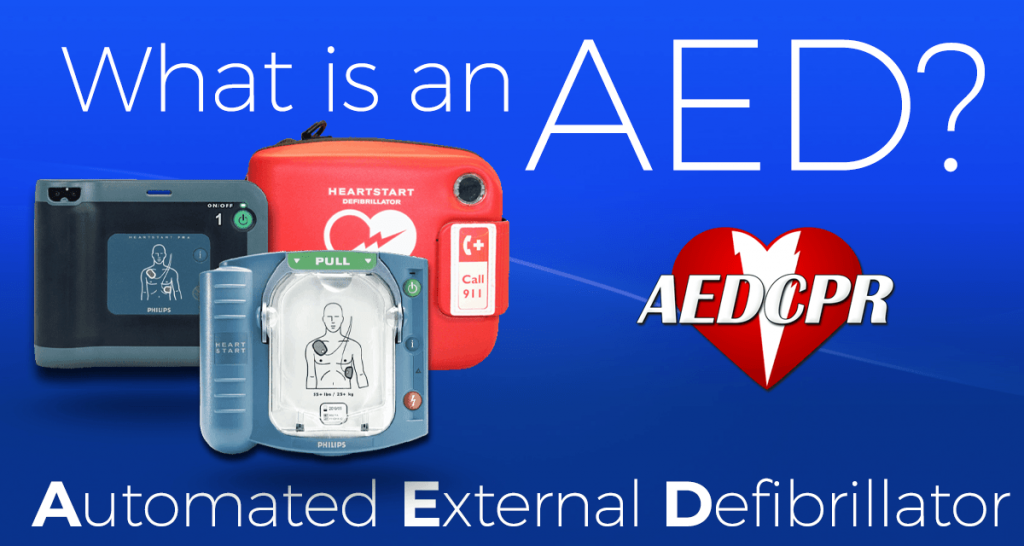
An AED is a portable device that is used to diagnose and treat ventricular fibrillation (VF) and pulseless ventricular tachycardia (VT). The AED works by sending a shock through the victim’s chest to stop these life-threatening cardiac arrhythmias. This allows the heart to re-establish a sustainable pulse. AED’s are designed for both … read more
A heart attack can be a frightening, life-changing event. Returning to normal life after surviving a heart attack can be difficult. While the road to recovery can be overwhelming, most people can go on to experience normal lives while taking measures to prevent heart disease.