


TL;DR
Your ejection fraction (EF) is one of the most important numbers for understanding how well your heart is pumping blood. If you’ve recently had an echocardiogram or other heart test, knowing what your EF means can help you better understand your heart health. This guide explains what a normal EF looks like, what can cause it to be low, how it’s measured, and when it’s time to talk with your healthcare provider.
Your heart beats around 100,000 times every day, pumping blood throughout your body to deliver oxygen and nutrients to every organ and tissue in your body. But how do doctors know whether your heart is pumping effectively? One of the most important measurements they use is called ejection fraction (EF).
If you’ve had an EKG, ECG, cardiac MRI, or another heart imaging test, you’ve probably seen an ejection fraction percentage in your results. While the number may seem confusing at first, understanding your EF can provide valuable insight into your cardiac health and help you better understand discussions with your cardiologist.
In this article, we’ll explain what ejection fraction is, what’s considered normal, what causes a low EF, and why this measurement is so important.
What Is Ejection Fraction?
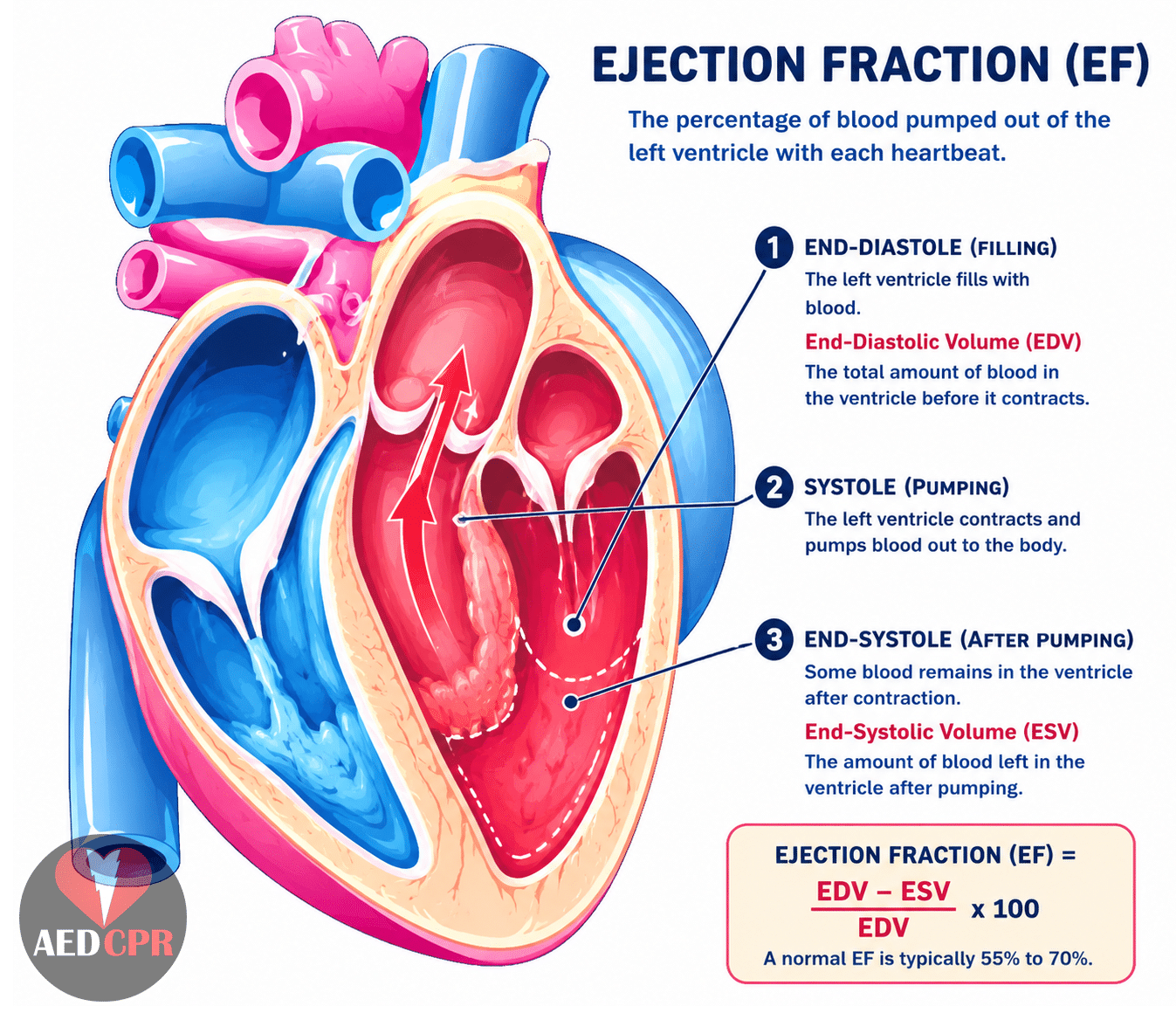
Ejection Fraction (EF) is the percentage of blood pumped out of the heart’s left ventricle with each heartbeat. The left ventricle is the main supplier of blood to the body.
After each contraction, your heart fills with blood, then contracts again to pump that blood to the rest of your body. However, it doesn’t empty completely with each contraction. Instead, a healthy heart pumps out only a portion of the blood inside the left ventricle. The percentage of the blood that is pumped from the left ventricle is the Ejection Fraction.
For example:
- Before a heartbeat, the left ventricle contains 120 milliliters (mL) of blood.
- During the heartbeat, it pumps out 78 mL.
- The remaining 42 mL stays in the ventricle.
Since 78 is 65% of 120, the ejection fraction is 65%.
This percentage tells doctors how efficiently your heart is pumping blood.
Why Is Ejection Fraction Important?
Ejection fraction is an essential measurement for evaluating heart function.
Doctors use EF to:
- Diagnose certain types of heart failure
- Assess damage after a heart attack
- Monitor cardiomyopathy and other heart diseases
- Evaluate whether treatments are improving heart function
- Determine if patients may benefit from implanted devices such as a implantable cardioverter-defibrillator (ICD)
EF is an important measurement, but it is only one aspect of assessing heart health. Symptoms, physical exams, blood tests, imaging, and medical history are also essential for a complete diagnosis.
What Is a Normal Ejection Fraction?
An ejection fraction between 55% and 70% would be considered normal for a healthy adult.
Here’s a general guide:
| Ejection Fraction | Interpretation |
| 55–70% | Normal pumping function |
| 50–54% | Slightly below normal |
| 41–49% | Mildly reduced pumping ability |
| 40% or lower | Reduced EF, often associated with heart failure |
| 35% or lower | Significantly reduced function with increased risk of serious heart rhythm problems |
Can You Have Heart Failure with a Normal EF?
Yes. This condition is called Heart Failure with Preserved Ejection Fraction (HFpEF).
This is caused by the lack of blood entering the left ventricle. Nearly half of all people with heart failure have a normal or near-normal ejection fraction.
In HFpEF:
- The heart muscle contracts normally.
- The left ventricle becomes stiff and doesn’t relax properly.
- Less blood fills the ventricle before each beat.
- Even though a normal percentage is pumped out, the total amount of blood delivered to the body may still be insufficient.
HFpEF is especially common among older adults and people with:
- High blood pressure
- Diabetes
- Obesity
- Kidney disease
- Sleep apnea
What Causes a Low Ejection Fraction?
A low EF generally means the heart muscle has become weakened or damaged.
Common causes include:
Coronary Artery Disease
Blocked arteries reduce blood flow to the heart muscle, weakening its ability to pump effectively.
Heart Attack
A heart attack can permanently damage part of the heart muscle, reducing its pumping strength.
Cardiomyopathy
Diseases like cardiomyopathy that affect the heart muscle can enlarge or weaken the left ventricle.
High Blood Pressure
Over time, uncontrolled hypertension forces the heart to work harder, eventually weakening the muscle.
Heart Valve Disease
Damaged or narrowed valves increase the workload on the heart.
Myocarditis
Inflammation of the heart muscle, often caused by viral infections, can temporarily or permanently reduce EF.
Alcohol
Long-term heavy alcohol consumption can damage heart muscle cells.
Cancer Treatment
Radiation and some chemotherapy drugs can cause heart disease.
Symptoms of a Low Ejection Fraction
Some people with a mildly reduced EF have no symptoms.
Others may experience:
- Shortness of breath
- Fatigue
- Swelling of the feet, ankles, or legs
- Difficulty exercising
- Persistent coughing
- Rapid heartbeat
- Dizziness
- Chest discomfort
If you develop sudden chest pain, severe shortness of breath, or fainting, call 911 and seek emergency medical care immediately.
How Is Ejection Fraction Measured?
Several imaging tests can calculate EF.
Echocardiogram
This is the most common method. An echocardiogram uses ultrasound waves to create moving images of the heart while measuring how much blood enters and leaves the left ventricle.
Cardiac MRI
Provides extremely detailed images and highly accurate EF measurements.
Nuclear Stress Test
Evaluates both blood flow and pumping function using a small amount of radioactive tracer.
Cardiac CT
Sometimes used to assess heart anatomy and ventricular function.
Cardiac Catheterization
During certain procedures, doctors can directly measure heart function and calculate EF.
Can Ejection Fraction Improve?
Depending on the underlying cause, EF can improve. If the underlying cause can be treated, the heart’s pumping ability can improve over time.
Treatment may include:
- Blood pressure medications
- ACE inhibitors or ARBs
- Beta blockers
- SGLT2 inhibitors
- Diuretics
- Treating blocked coronary arteries
- Repairing heart valves
- Managing diabetes
- Quitting smoking
- Limiting alcohol
- Weight loss
- Regular physical activity under medical supervision
Some patients experience a significant improvement in EF quickly, while others see improvement after several months of treatment.
Can Lifestyle Changes Help?
Absolutely! Healthy lifestyle habits reduce strain on the heart and may help preserve or improve heart function.
Consider these heart-healthy habits:
- Eat a heart-healthy diet.
- Exercise regularly, if approved by your healthcare provider.
- Maintain a healthy weight.
- Control blood pressure, cholesterol, and blood sugar.
- Avoid smoking.
- Limit alcohol intake.
- Get enough sleep.
- Manage stress.
Does a Higher EF Always Mean Better Heart Health?
Absolutely not! EF is a tool used along with other diagnostics to determine overall heart health. It can also be used to determine the effect of underlying heart conditions.
As stated earlier, some heart conditions, such as hypertrophic cardiomyopathy, can produce a very high EF while still impairing the heart’s ability to function normally.
A person with a mildly reduced EF may have no issues, while someone with a normal EF may still have symptoms caused by other heart conditions. That’s why healthcare providers evaluate EF together with your symptoms, physical exam, and other test results.
When Should You Ask Your Doctor About Your EF?
Knowing your EF can help provide an understanding of your overall heart health. If you’ve had a heart attack, have heart failure, cardiomyopathy, valve disease, or unexplained shortness of breath, you may want to inquire about your EF.
Questions could include:
- What is my ejection fraction?
- Is it normal for someone my age?
- Has it changed since my last test?
- What caused it to be high or low?
- Do I need treatment or repeat testing?
Understanding your EF can help you take a more active role in managing your cardiovascular health.
Final Thoughts
Ejection fraction is a key way to measure how well your heart works. It shows how much blood your heart’s left ventricle pumps out with each beat. A normal ejection fraction is usually between 55% and 70%. If your ejection fraction is lower, it might mean your heart muscle is weaker, or you could have heart failure.
Ejection fraction is important, but it is not the only thing that matters. Some people with a normal ejection fraction can still have heart failure, and some with a low ejection fraction may not have many symptoms. This is why a qualified healthcare provider should look at your ejection fraction along with your overall health.
Understanding your ejection fraction can help you learn more about your heart, ask good questions at your doctor visits, and make choices that keep your heart healthy in the long run.
Ejection Fraction Calculator
Frequently Asked Questions
What is a normal ejection fraction?
A normal ejection fraction is generally considered to be between 55% and 70%.
Can a low ejection fraction be reversed?
Sometimes. Depending on the cause, medications, lifestyle changes, procedures, or surgery may improve heart function and increase EF.
Is ejection fraction the same as cardiac output?
No. Ejection fraction measures the percentage of blood pumped from the left ventricle with each beat, while cardiac output measures the total volume of blood pumped by the heart each minute.
Should I be worried if my EF is below 50%?
Not necessarily. A mildly reduced EF doesn’t always cause symptoms, but it should be evaluated by your healthcare provider to determine the underlying cause and whether treatment is needed.