


TL;DR
Knowing when to use an AED and how to use an AED can dramatically improve the chance of survival during cardiac arrest.
- Use an AED when a person is unresponsive and not breathing
- Start CPR immediately and continue until the AED arrives
- AED and CPR work together to restore heart rhythm
- AEDs give voice prompts and can be used without training
- Acting within 3–5 minutes greatly increases survival odds
Quick and decisive action can mean the difference between life and death in emergencies. With sudden cardiac arrest (SCA), every second counts. Immediate CPR and defibrillation within 3-5 minutes will give the best chance of survival. Automated External Defibrillators (AEDs) are powerful tools for saving lives—especially when you know how to use an AED correctly.
Whether you’re a concerned parent or someone who wants to be prepared for emergencies, this guide explains when should an AED be used during CPR, the steps to use an AED, and how AED and CPR work together in saving a life.
Recognizing Cardiac Arrest
Cardiac arrest occurs when the heart unexpectedly stops beating, cutting off blood flow to the brain and other vital organs. This condition is different from a heart attack, which involves blocked blood flow to the heart.
Recognizing the signs of cardiac arrest is the first step in knowing when to use an AED.
Signs of Cardiac Arrest:
- Sudden Collapse: The person may suddenly fall or collapse without warning.
- No Pulse: There is no detectable pulse, indicating the heart is not beating effectively.
- No Breathing or Only Gasps: The person is not breathing or is gasping for air.
- Loss of Consciousness: The person is unresponsive and unconscious.
If these signs are present, begin calling 911 immediately and prepare to perform CPR.
When to Use an AED
An automated external defibrillator (AED) is a device designed to analyze the heart’s rhythm and determines whether delivering the shock is necessary to restore a normal rhythm.
When should an AED be used during CPR?
- After you have confirmed the person is experiencing cardiac arrest by assessing for the symptoms mentioned above.
- After you’ve called 911 and performed 2 minutes of CPR on a child victim.
- As soon as the AED becomes available while someone continues cardiopulmonary resuscitation CPR
- Immediately after you determine that there are no signs of circulation on an adult victim.
If you find someone experiencing these symptoms, call 911, and designate someone to find the AED while you start CPR.
Can You Use an AED Without Training?
Yes. AEDs are designed for public use. They provide clear voice prompts that guide you step-by-step. However, formal training improves confidence and ensures you respond quickly and effectively.
Taking a CPR/AED course helps you understand how AED and CPR work together to improve survival rates.
When NOT to Use an AED
Knowing when not to use an AED is just as important as knowing when to use one. Such as:
- The person is conscious and breathing normally. This may be an indication they are experiencing a heart attack and not cardiac arrest. An AED should only be used on individuals who are unresponsive and have no pulse.
- The person is wet or on a damp surface.
- The person has an exceptionally hairy chest. The AED pads need to be applied directly to the skin, so if the person has a hairy chest, you may need to remove the hair before you begin.
Also, note that special pads are required for those under eight years old. If these pads are not available, do not use the regular pads.
When to Use an AED vs CPR
Both CPR and the use of an AED are important in responding to emergencies that involve cardiac arrest, but they serve different purposes, so it’s essential to know when each is appropriate.
CPR (Cardiopulmonary Resuscitation)
- Purpose: CPR helps maintain blood flow to the brain and vital organs until professional help arrives or an AED is available.
- When to Use: Perform CPR immediately if the person is unresponsive, not breathing, and has no pulse. Continue CPR until an AED is ready for use or emergency personnel take over.
AED
- Purpose: The AED delivers a shock to restart the heart’s normal rhythm. It analyzes the heart’s rhythm and decides if a shock is necessary.
- When to Use: After confirming cardiac arrest, use the AED as soon as it is available. If advised, follow the device prompts to deliver a shock.
Step-by-Step Guide on When and How to Use an AED
Once you have determined the unconscious person is experiencing cardiac arrest and have assessed the situation to determine it’s safe to use an AED, these are the steps to follow. Note that this information should not replace formal CPR training.
- Turn on the AED: Open the device and turn it on. AEDs typically have a power button or open automatically when the case is opened.
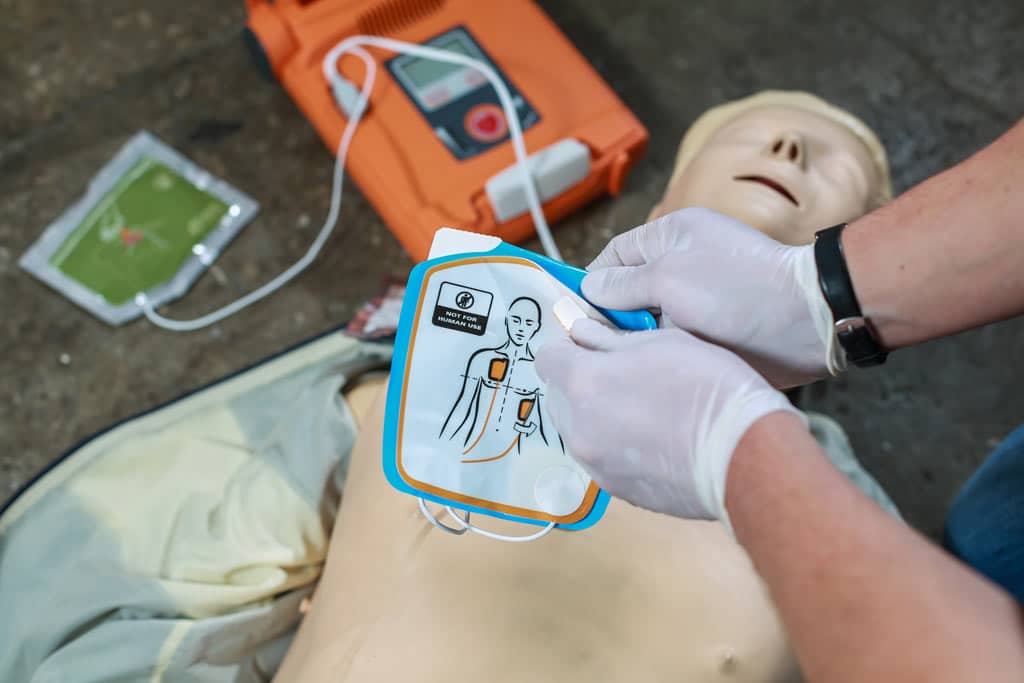
- Attach the Pads: Follow the voice prompts and place the adhesive pads on the person’s bare chest. One pad is placed on the upper right side and the other on the lower left side of the chest.
- Analyze the Rhythm: Allow the AED to analyze the heart’s rhythm. Ensure no one is touching the victim during this process.
- Deliver the Shock: If the AED advises a shock, ensure everyone is clear of the victim and press the shock button.
- Continue CPR: After the shock, continue with CPR if advised by the AED. Follow the device’s prompts until emergency personnel arrive.
While this information can help you respond in emergencies, the best thing you can do is take a first aid course to learn CPR and how to use an AED.
Why Acting Fast Matters
More than 350,000 cardiac arrests occur outside hospitals each year. Immediate CPR and early defibrillation within minutes can double or triple survival chances.
The key to saving a life is recognizing when the heart has stopped beating, starting CPR immediately, and using an AED as soon as possible.
The best way to prepare? Take a CPR/AED training course and practice both how to use an AED and how to perform CPR. In an emergency, your actions could mean everything.
Learn more and enroll for Online CPR/AED/First Aid Training Classes