TL;DR:
An amputation is always a medical emergency. Call 911 immediately, control severe bleeding with direct pressure or a tourniquet if needed, and treat the person for shock. Preserve the amputated body part by wrapping it in a clean, moist cloth, sealing it in a plastic bag, and keeping it cool, but never place it directly on ice. Immediate first aid can improve the person’s chances of survival and may increase the possibility of successful reattachment.
Amputation Injuries Require Immediate Action
Amputation injuries are among the most severe traumatic emergencies a person can experience.
The most immediate risk is not the loss of the limb, but life-threatening blood loss. Death from severe bleeding can occur within minutes, so prompt action is essential.
If you witness an amputation injury, knowing how to respond before emergency medical services (EMS) arrive can help save a life.
What Is an Amputation?
An amputation occurs when a body part is completely or partially severed or separated from the body because of trauma.
Examples include:
- A finger or thumb cut off by a saw
- A hand caught in industrial machinery
- A foot severed in a farming accident
- An arm or leg injured in a serious motor vehicle crash
Even if the body part is only partially attached, the injury should still be treated as a medical emergency.
It is generally not considered an amputation when certain body parts are severed or removed. However, in some cases, the injury should still be treated as a medical emergency.
These include:
- Ears
- Teeth
- Scalping
- Degloving
- Fingernails/toenails
Call 911 Immediately
Call 911 and activate EMS immediately after an amputation injury.
Provide the dispatcher with:
- Your exact location
- What happened
- Which body part was amputated
- Whether severe bleeding is present
- The person’s age (if known)
- Whether the person is conscious and breathing
If you are not alone, instruct someone to call 911 and begin first aid.
Step 1: Control Severe Bleeding
Stopping life-threatening bleeding is your first priority.
Apply Direct Pressure
Whenever possible:
- Use sterile gauze or a clean cloth.
- Press firmly over the wound.
- Maintain continuous pressure.
- If blood soaks through, place additional dressings on top without removing the original one.
Removing soaked dressings can disrupt clot formation and increase bleeding.
When to Use a Tourniquet
If direct pressure does not stop severe bleeding or the bleeding is so severe that it must be stopped immediately, a tourniquet should be applied.
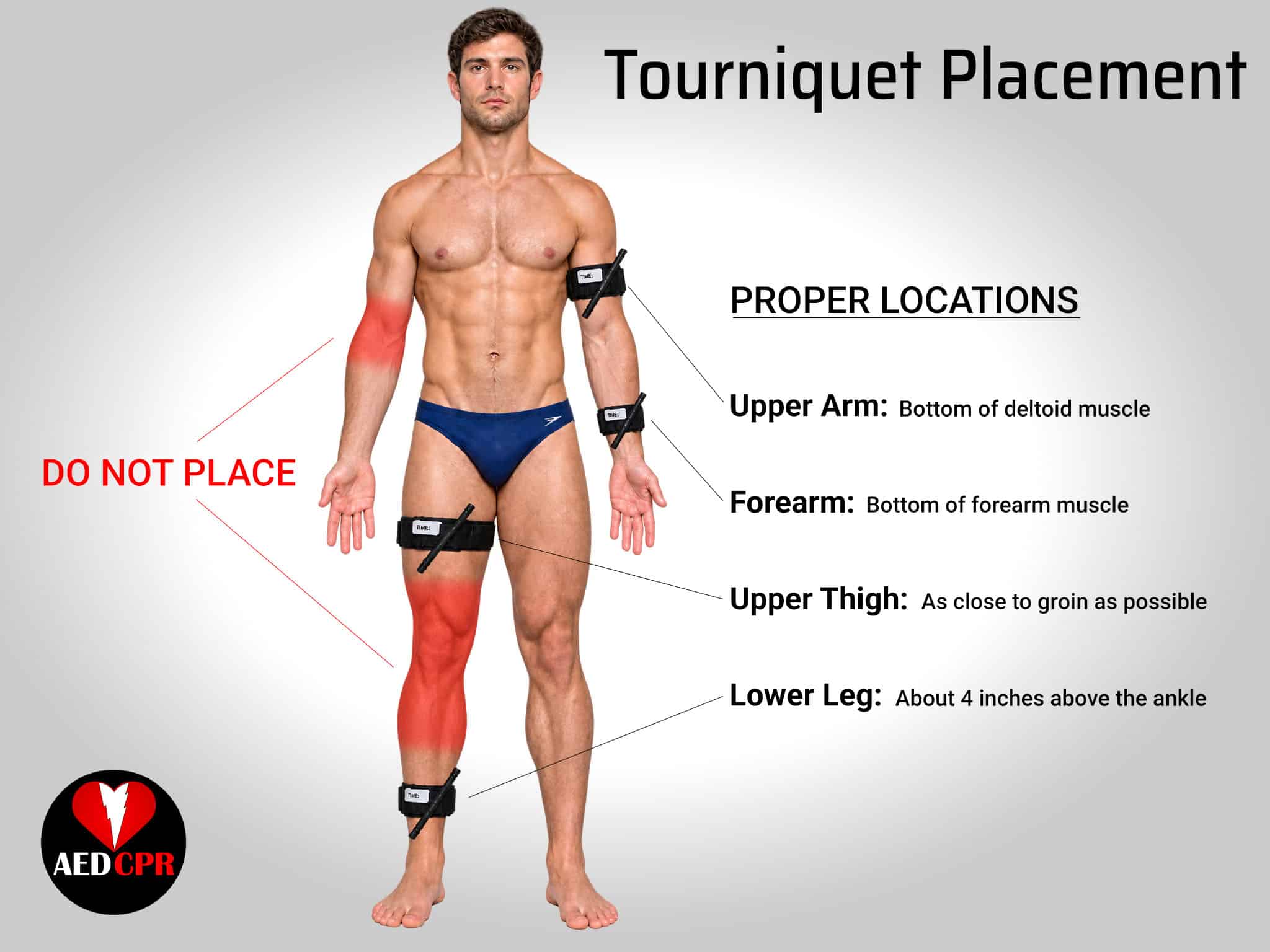
Proper Tourniquet Placement
- Place the tourniquet 2 to 3 inches above the wound.
- Never place it directly over a joint such as the elbow or knee.
- Tighten until the bleeding stops completely.
- Do not loosen or remove the tourniquet once it has been applied.
Can You Use an Improvised Tourniquet?
Yes, you can absolutely make your own tourniquet.
There is lots of misinformation online regarding the use of improvised tourniquets. The claim is that using belts, ropes, cords or thin materials will not work and can cause more damage. They recommend to just apply pressure if a commercially made tourniquet is not available. However, this is bad advice. Often from people trying to sell tourniquets.
In our experience, using an improvised tourniquet can save a life. Tourniquets are used to stop bleeding when applying pressure is not enough. While an improvised tourniquet may not be as effective, it can make the difference between life and death.
Step 2: Treat for Shock
Significant blood loss can rapidly lead to shock, a life-threatening condition where the body cannot supply enough oxygen to vital organs.
Signs and Symptoms of Shock
Watch for:
- Pale or cool skin
- Rapid pulse
- Rapid breathing
- Weakness
- Confusion
- Anxiety
- Dizziness
- Fainting
- Loss of consciousness
How to Help Someone in Shock
While waiting for EMS to arrive:
- Keep the person lying flat if possible.
- Keep them warm using a blanket or jacket.
- Reassure them and keep them calm.
- Do not give food or drinks.
- Continue monitoring their breathing and level of consciousness.
Monitor the person and look for changes in their condition. If they become unresponsive, check for signs of breathing and circulation. Begin CPR if necessary.
Step 3: Care for the Amputated Body Part
Always treat the amputated body part as if there is a chance of reattachment. Proper handling may improve the chances that surgeons can reattach it successfully.
Follow These Steps
- If needed, gently rinse away obvious dirt with clean water.
- Wrap the body part in sterile gauze or a clean cloth lightly moistened with clean water or sterile saline.
- Place the wrapped body part in a clean waterproof plastic bag and seal it.
- Place the sealed bag into another container filled with ice and water.
Important
Never place the amputated body part directly on ice, in water, or in a freezer.
Direct contact with ice can freeze and damage tissue, reducing the chances of successful reattachment.
Send the body part with EMS to the hospital.
What If the Body Part Cannot Be Found?
Stopping the bleeding and treating shock remain the highest priorities. If the body part can not be found, call 911 and follow all of the other steps to help the person.
What Not to Do
Avoid these common mistakes:
- Do not delay calling 911.
- Do not remove a properly applied tourniquet.
- Do not remove dressings to check the wound.
- Do not place the amputated body part directly on ice.
- Do not give the injured person food or drinks.
Can an Amputated Body Part Be Reattached?
Sometimes. Successful reattachment depends on several factors, including:
- Which body part was amputated
- How much tissue damage occurred
- How quickly surgery begins
- How well the amputated part was preserved
- The person’s overall health
Fingers, toes, and hands generally have higher success rates than larger limbs, especially when treatment begins quickly.
Learn Life-Saving First Aid Skills
In an emergency, seconds count. Severe bleeding can become fatal in just a few minutes. Knowing how to control bleeding, recognize shock, and properly use a tourniquet can make the difference between life and death.
Completing a First Aid and CPR course will give you the confidence and skills to respond quickly and effectively during these rare but devastating emergencies.
Final Thoughts
An amputation injury is always a medical emergency. Quick action is essential: call 911 immediately, stop life-threatening bleeding, treat the person for shock, and properly preserve the amputated body part. Acting quickly and remaining calm gives the injured person the best chance for survival and, in some cases, successful reattachment of the amputated body part.